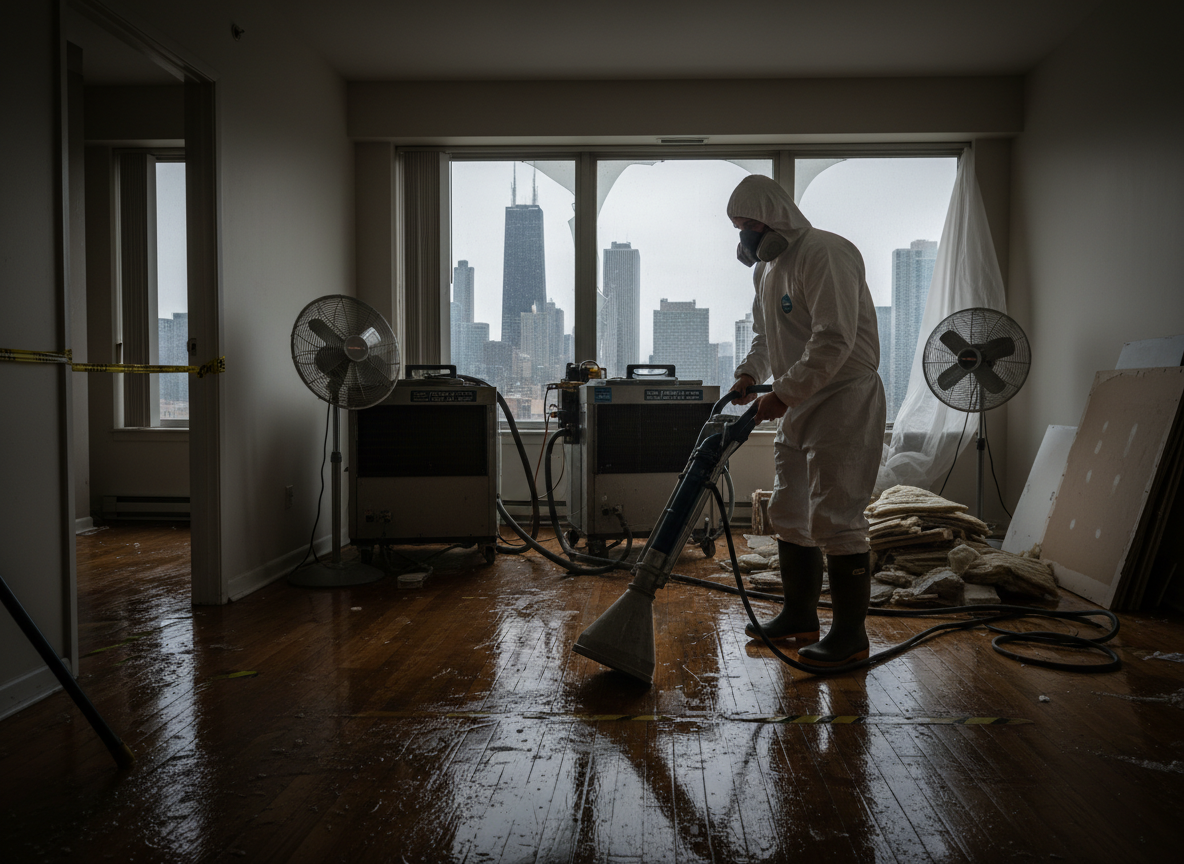
Chicago's older housing stock, especially pre-1940 brick and frame buildings in neighborhoods such as Hyde Park, Bridgeport and Pilsen, creates unique challenges during water intrusion. Moisture travels through plaster lath and into joist cavities that are difficult to reach without removing sections of wall or ceiling. Cold winters bring frequent pipe bursts when temperatures drop, while the humid continental summers keep relative humidity high enough that drying times extend well beyond what newer construction would require.
Flooding along the Chicago River and heavy rains that overwhelm combined sewer systems often affect lower levels in West Loop, South Loop and Uptown properties. Water migrates laterally through shared foundation walls between row houses and two-flats common in Logan Square and Andersonville. Technicians must account for these connected structures and the clay-heavy soils that slow natural drainage around foundations in Cook County.
Properties near Lake Michigan or in Rogers Park experience additional humidity loads from lake-effect weather, which can re-wet materials during the drying phase if dehumidification is not aggressive. Older cast-iron plumbing in Lincoln Park and Wicker Park homes frequently leaks at joints that are hidden behind finished surfaces, requiring targeted moisture mapping rather than blanket removal of drywall.
Technician insight
In Chicago, the thing that catches most people out with water damage restoration is how quickly moisture moves through the brick and plaster in 1920s two-flats in neighborhoods like Bridgeport and Pilsen; if you only dry the visible surface after a winter pipe burst, hidden mold develops behind the lath within days because the clay soil and tight lot lines keep everything damp longer.
Pipe Burst in Lincoln Park Two-Flat
A second-floor supply line froze and split during a January cold snap, sending water through the ceiling into the unit below. Meters showed elevated moisture in plaster walls and hardwood subfloor across both units. Extraction and targeted wall removal followed by continuous dehumidification dried the structure without needing to open every ceiling; the owners moved back in after three weeks with floors and walls restored.
Water Damage Restoration Services We Offer
✓Emergency Water Extraction
Rapid removal of standing water from basements and first floors using truck-mounted pumps and portable extractors sized for Chicago row-house layouts.
✓Structural Drying and Dehumidification
Placement of commercial air movers and dehumidifiers to pull moisture from plaster, hardwood floors and joists common in pre-war buildings across Lakeview and Logan Square.
✓Basement Water Damage Repair
Cleanup and drying of finished and unfinished basements after sewer backup or foundation seepage typical in older South Loop and Pilsen properties.
✓Ceiling and Wall Water Damage Repair
Targeted removal and drying behind lath-and-plaster or drywall in multi-story homes where leaks travel from upper floors in Wicker Park and Andersonville.
✓Sewage Cleanup and Sanitation
Containment, removal and disinfection after category three water events that occur when combined sewers back up during heavy Cook County storms.
✓Hardwood Floor Water Damage Restoration
Cupped or buckled floor assessment and drying in historic residences near Millennium Park and the Art Institute where original maple and oak are prevalent.
Water Damage Restoration Cost in Chicago, IL
| Service | Typical Range | What Affects It |
|---|---|---|
| Initial Assessment and Moisture Mapping | $150–$350 | Varies by number of levels and access in older multi-unit buildings |
| Water Extraction | $600–$1,800 | Depends on volume, depth and whether sewage is involved |
| Equipment Drying (per week) | $800–$2,200 | Influenced by square footage and humidity load from lake-effect weather |
| Structural Material Removal | $400–$1,200 | Amount of plaster or drywall that must be opened in tight Chicago row houses |
Ranges are typical for Chicago, IL and confirmed with an exact written quote before any work starts.
How it works
- 1
On-Site Assessment
Technicians inspect the property, map moisture with meters, and identify affected materials in the specific construction style of the neighborhood.
- 2
Water Removal
Standing water is extracted using pumps and wands, with care taken around shared walls and older plumbing common in Chicago two-flats.
- 3
Drying Phase
Industrial drying equipment is positioned to reach cavities behind plaster and under floors while monitoring humidity levels daily.
- 4
Restoration Work
Damaged materials are replaced or repaired and the space is returned to pre-loss condition with finishes matched to the original building.
Pricing
Upfront quotes based on inspection; ranges reflect typical Cook County residential jobs.