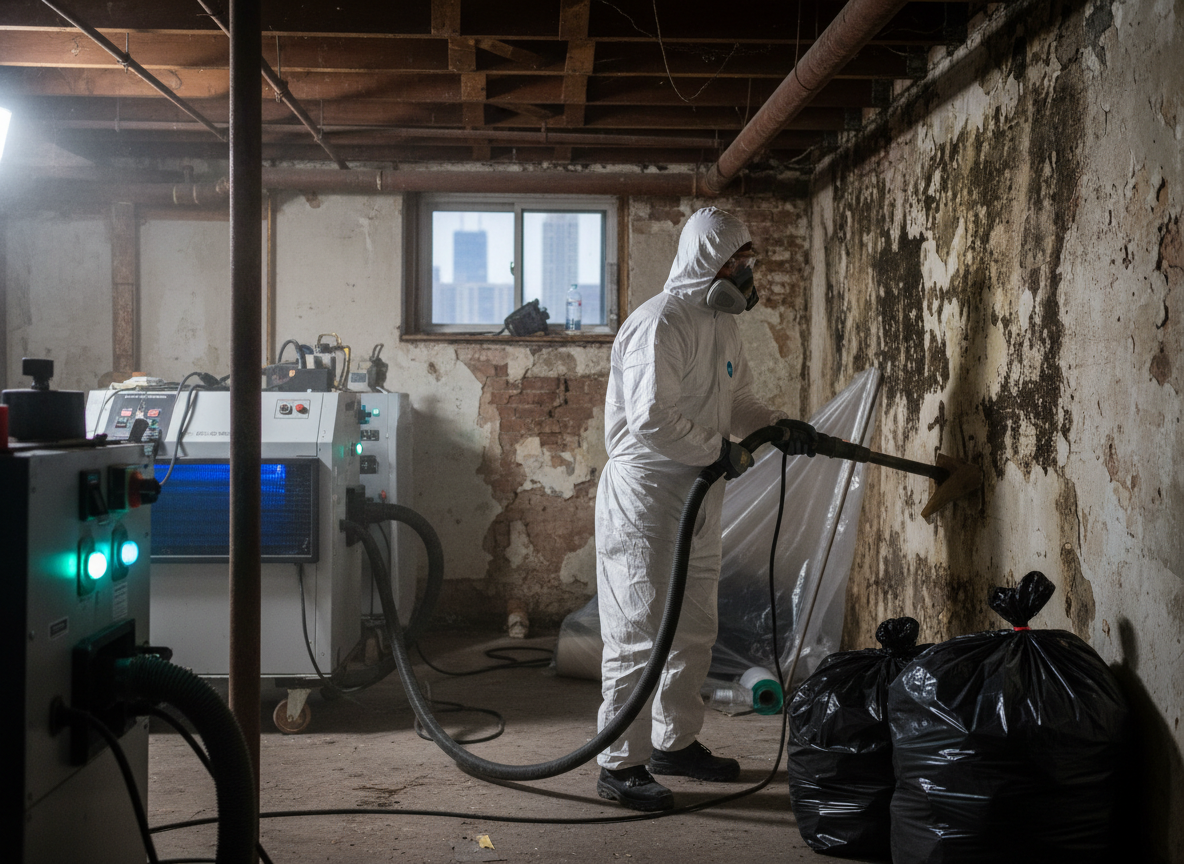
Rogers Park sits at the northern edge of Chicago along Lake Michigan in Cook County, where older brick apartments and early 1900s bungalows line streets like Sheridan Road and Morse Avenue. Water damage restoration crews here often handle pipe bursts after winter freezes and storm-driven flooding that pushes water through basements close to the lake. Water extraction teams work around narrow lots and shared plumbing in multi-unit buildings that make containment more involved than in newer suburban homes.
Local crews respond to calls from properties near Loyola Park and Touhy Park where high groundwater and aging sewer lines increase the chance of sudden leaks. Cold winters followed by humid summers create repeated expansion and contraction stress on pipes, especially in the two- and three-flat buildings common throughout the 60626 zip code. Service trucks stage equipment on side streets off Devon Avenue or Clark Street to reach units without blocking CTA access.
Businesses serving Rogers Park also cover spillover jobs from nearby Evanston when lake-effect storms hit both sides of the border. Technicians know which blocks sit lower and retain water longer after heavy rain, adjusting drying plans for the dense housing stock that limits airflow between buildings.
Around Rogers Park
We regularly work near:
- 📍Loyola Park
- 📍Touhy Park
- 📍Hartigan Park
- 📍Pottawattomie Park
- 📍Morse Avenue
- 📍Sheridan Road
Water Damage Restoration in Rogers Park — Local Notes
- •Many Rogers Park buildings date to the 1920s with cast-iron stacks that crack during freeze-thaw cycles, requiring targeted water extraction behind plaster walls.
- •Lakefront blocks east of Sheridan Road see more frequent basement seepage after nor'easters because the grade drops toward the water.
- •Narrow gangways between two-flats limit large dehumidifier placement, so crews often use smaller portable units and longer exhaust runs.
- •Proximity to the CTA Red Line means work windows must avoid rush-hour street closures around Morse and Loyola stations.