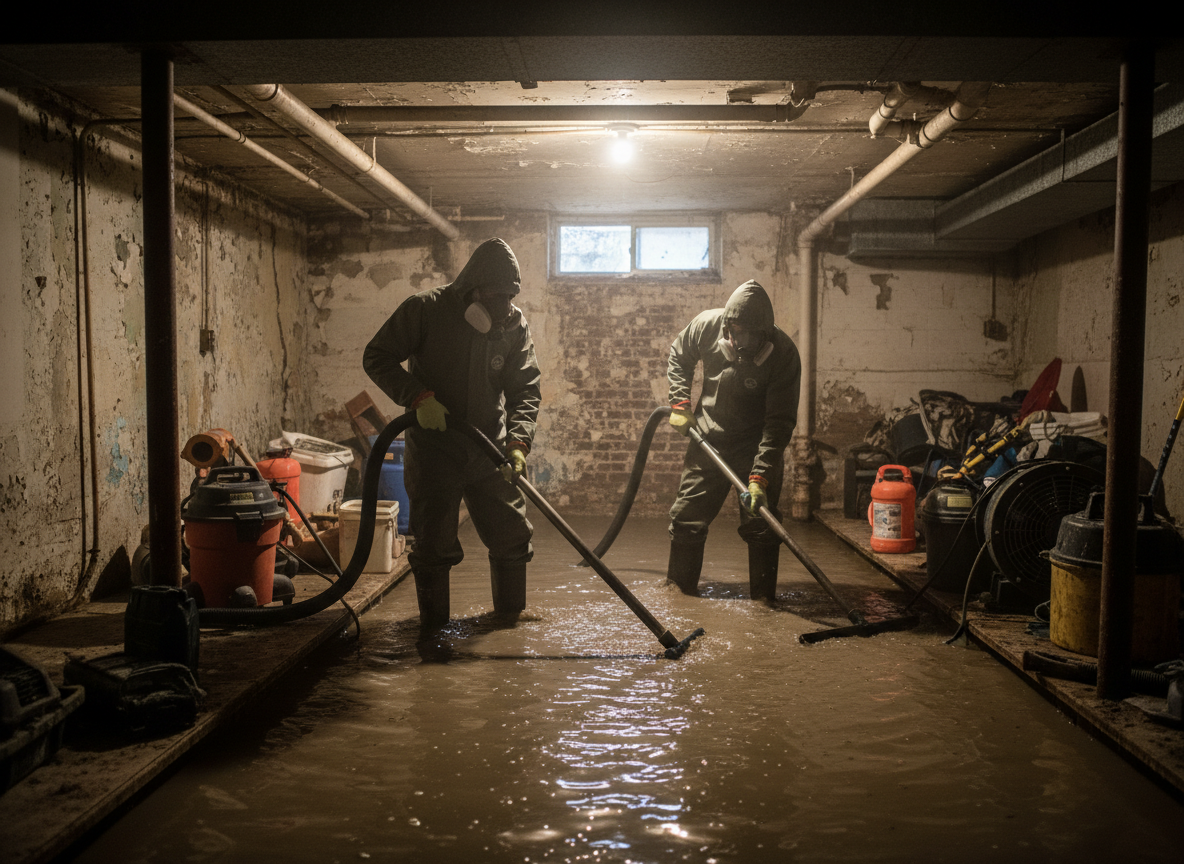
Logan Square's mix of early-1900s two-flats and greystones along Milwaukee Avenue and Kedzie Boulevard sees frequent water damage from aging galvanized pipes and flat roofs that pond during heavy rains. Winters in Cook County bring deep freezes that split lines in unheated basements, while summer storms overwhelm older combined sewers near the boulevard. Crews reach these addresses quickly via the wide diagonal streets but often work in tight rear alleys where equipment must be carried in by hand.
Property owners near Palmer Square and the Logan Square Monument deal with water extraction after basement seepage that travels through shared foundation walls in attached buildings. Cold snaps followed by rapid thaws create ice dams that push meltwater under shingles on the neighborhood's common brick-and-frame homes. Restoration focuses on drying lath-and-plaster walls without disturbing original woodwork that many residents want preserved.
Around Logan Square
We regularly work near:
- 📍Logan Square Monument
- 📍Palmer Square Park
- 📍Milwaukee Avenue
- 📍Kedzie Boulevard
- 📍Logan Square Branch Library
- 📍Humboldt Park
Water Damage Restoration in Logan Square — Local Notes
- •Many two-flats built before 1920 along Kedzie have narrow lot lines that limit equipment access, requiring smaller extraction units carried through gangways.
- •Combined sewer backups near the Milwaukee Avenue corridor often affect first-floor units after heavy Cook County rainfall because storm drains tie directly into sanitary lines.
- •Unheated rear porches common on Logan Square greystones allow supply lines to freeze solid during January cold fronts, pushing water into finished living spaces below.
- •Proximity to the Chicago River's North Branch means high water tables that keep crawl spaces damp year-round, complicating drying after any roof or pipe failure.